Discipline of the Spirit I. Examination of Conscience.
Руслан Исламов · · Series: Наедине с душой
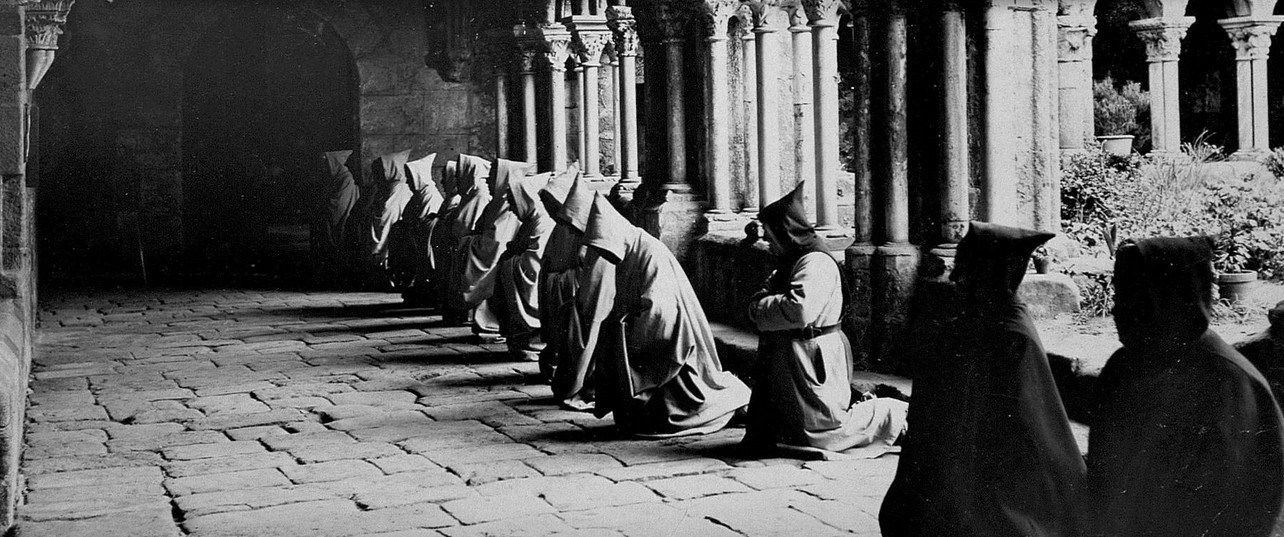
Capitulum I. Examination of Conscience
Today, it is fashionable to seek spiritual growth towards the East, paganism, and esotericism. Distant and unfamiliar practices seem shrouded in mysticism and a special charm of secret wisdom; to a large extent, the supposed "countercultural" aspect plays into this, as it always seems better where we are not.
However, Western spirituality and philosophy (in their modern form) have existed for about two thousand years, growing from a very ancient spiritual tradition that combines not only Western theatre but also progressive Middle Eastern and African cultures, repeatedly filtered and deeply understood through Hellenic and Roman expansions; subjectively speaking, these fruits are much closer and of higher quality for us, as they take into account the cultural and historical environment in which we form as individuals.
The Catholic Church, over its long existence, has gifted Western civilisation with many effective spiritual practices, many of which modern psychology is only just rediscovering. I wish to speak about one such intriguing exercise, primarily based on personal experience.
The name — extraordinarily beautiful and grandiose (which is precisely why we love the Sancta Ecclesia) — is the examination of conscience, examen conscientiae. In the popular Catholic tradition, the examination of conscience is understood as preparation for confession.
"Before beginning confession, one must try to recall all one's actions since the last confession and carefully examine not only one's behaviour but also all the states of one's soul. One must clearly recognise all situations where love for oneself was stronger than love for God and neighbour..." Prayer Book. Brief Catechism. "Rech" Publishing, 2016.
As seen from the "prayer book," the examination of conscience is a thorough technical review of the entire period since the last confession for the commission of mortal sins: "by thought, word, deed, and omission." The penitent must go through their memory of the committed sins according to the Church's canon, carefully studying the circumstances and reasons, and then using this review — confess as fully and consciously as possible.
I, as a person initially (and before coming to the Church) distant from the Catholic tradition, became acquainted with the examination of conscience when I was undergoing the Spiritual Exercises (Exercitia Spiritualia) of Ignatius of Loyola (31 July is celebrated in the Catholic Church as his feast day), the founder and chief ideologist of the monastic order "Society of Jesus" (known as the Jesuit order).
Today, the Spiritual Exercises are conducted not only for Christians, so the rhetoric and subject of the examination of conscience become more contemporary. For those practising, it is recommended to "work on" any bad habit they decide to rid themselves of, which hinders both the practitioner and those around them. I chose swearing.
Before practising the examination of conscience, I swore like a sailor (despite having a fairly extensive vocabulary). Before this, I had tried several times to rid myself of swearing on my own, but all attempts ended in failure.
However, within a few weeks of practising the examination of conscience, swearing almost completely disappeared from my speech (until I brought it back myself — now it is used only appropriately, fulfilling purely literary tasks).
There is no visible strict self-control, from which the subconscious would constantly protest and try to sabotage (which usually happened in previous attempts).
Having assessed the effect, I began to take other problematic aspects of myself, sometimes increasing the scale of the "sin," sometimes experimenting with "virtues." My Spiritual Exercises ended almost three months ago, but I still continue to "examine my conscience" three times a day to this day.